

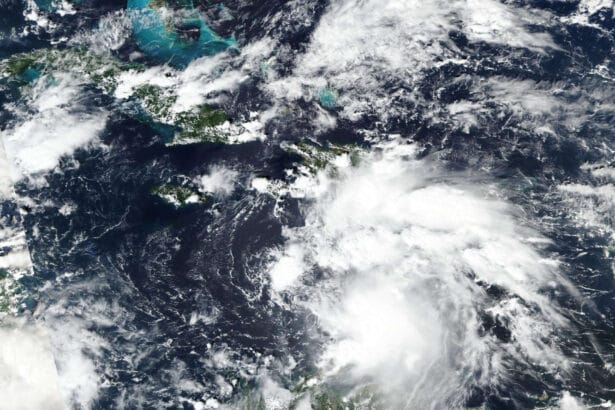
Tropical Storm Melissa has formed in the central Caribbean Sea, becoming the 13th named storm of the 2025 Atlantic hurricane season. The storm is moving westward and is expected to bring heavy rain, strong winds, and flash flooding to parts of Haiti, the Dominican Republic, Jamaica, and eastern Cuba over the next few days.
Where the Storm Is Now
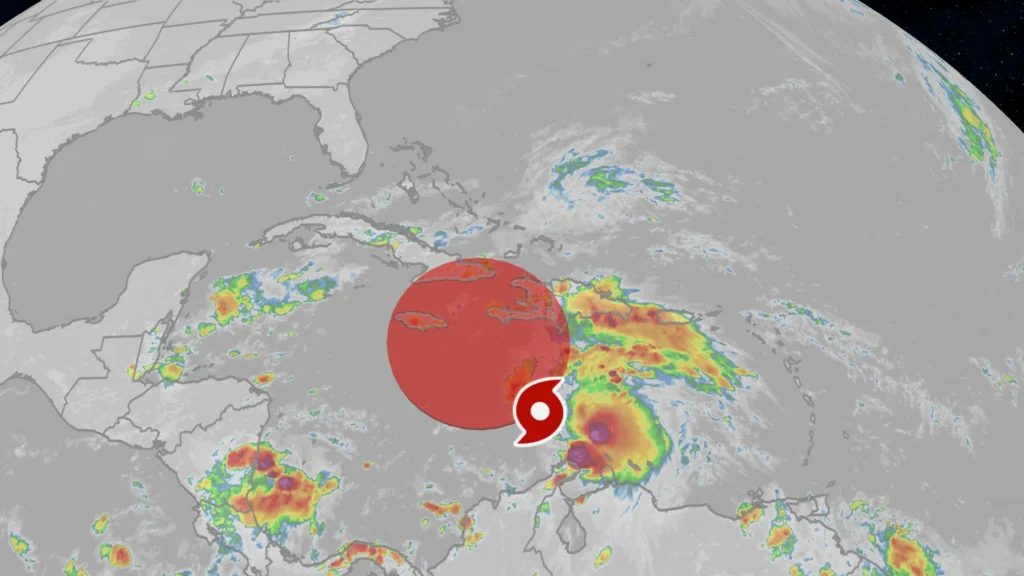
As of Tuesday morning, the National Hurricane Center (NHC) reported that Tropical Storm Melissa was located about 315 miles (507 km) south-southwest of Port-au-Prince, Haiti.
The storm has maximum sustained winds of 50 mph (80 kph) and is moving west at around 13 mph (20 kph).
Forecasters say tropical-storm-force winds are extending outward up to 120 miles (190 km) from the storm’s center. While Melissa is not currently a hurricane, forecasters warn that it could strengthen slightly as it moves across warm Caribbean waters this week.
A tropical storm watch has been issued for Jamaica, and a hurricane watch is in effect for southern Haiti, where heavy rain and flash floods are expected.
Heavy Rain and Flooding Threat
Meteorologists warn that Melissa could dump 5 to 10 inches of rain across parts of Haiti and the Dominican Republic, with localized totals reaching 12 inches in mountainous areas.
Such heavy rainfall could trigger landslides and life-threatening flash floods, particularly in areas with poor drainage or deforestation.
The Dominican Republic’s Emergency Operations Center has already activated flood response plans in coastal provinces, and schools in several regions are closing early as a precaution.
In Haiti, officials are urging residents in flood-prone zones to seek higher ground.
“The soil is already saturated from last week’s rains,” said Haitian meteorologist Claude Marcel. “Even a small storm can create dangerous flooding in this situation.”
Regional Preparations Underway
Local authorities in Jamaica and Cuba have also begun storm preparations.
The Jamaican Meteorological Service warned fishermen to stay in port and urged residents to secure property and avoid travel during the storm.
In Cuba, civil defense officials are monitoring Melissa closely. While the storm’s current path keeps it south of the island, its outer bands could still bring rain and gusty winds to eastern provinces by Thursday.
The United States Coast Guard has advised vessels in the region to avoid the storm’s projected path and monitor marine warnings.
How Strong Could Melissa Get?
According to the National Hurricane Center, Melissa may strengthen slightly before weakening again as it encounters cooler waters later this week.
Upper-level wind shear is expected to prevent major intensification, keeping the system at tropical storm strength.
Still, experts caution that even a weak tropical storm can cause serious problems.
“The biggest risk here isn’t wind—it’s rain,” said NHC forecaster Lisa O’Connor. “Flash floods and landslides are the main threats, especially in Haiti and the Dominican Republic.”
A Busy Hurricane Season
Melissa marks the 13th named storm of the 2025 Atlantic hurricane season, which has been more active than average.
Climatologists say warmer sea surface temperatures and favorable atmospheric conditions have helped storms form more frequently this year.
Typically, the 13th storm appears closer to late October, but Melissa’s development highlights how active the season remains.
Forecasters continue to watch other disturbances in the eastern Caribbean and the central Atlantic, though none currently pose an immediate threat.
Impact Beyond the Caribbean
While Melissa is not expected to threaten the U.S. mainland, its outer weather pattern could increase rip currents and rough surf along parts of Florida’s Atlantic coast later this week.
The National Weather Service has issued advisories for beachgoers to exercise caution.
Safety Tips for Residents
Authorities recommend that Caribbean residents:
- Stay informed through local weather updates.
- Avoid driving through flooded roads.
- Prepare an emergency kit with food, water, and batteries.
- Keep mobile phones charged and follow evacuation instructions if issued.
Looking Ahead
Tropical Storm Melissa is expected to continue moving west-northwest through Wednesday, brushing near Jamaica before approaching eastern Cuba or the Cayman Islands by the weekend.
If the storm’s path shifts north, Hispaniola could face widespread flooding.
Even if Melissa never becomes a hurricane, its rainfall and storm surge could make it one of the most disruptive systems of the season for the Caribbean islands.
As meteorologists continue to track its movement, residents are urged to remain alert and take all warnings seriously.