


China’s robotics industry is growing faster than ever. In 2025, Chinese robots are not just working inside factories. They are also entering hospitals, schools, and even homes. The rise of these robots shows how technology in China is changing daily life and the global economy.
China’s Push Toward a Robotic Future
China began investing heavily in robotics about a decade ago. The government included robotics development in its “Made in China 2025” plan, which aims to make the country a leader in high-end manufacturing and automation.
This long-term strategy is now paying off. According to the International Federation of Robotics (IFR), China installed more industrial robots in 2024 than any other country. Nearly half of all robots used globally are now operating in Chinese factories.
The goal is clear—to reduce labor costs, improve efficiency, and prepare for a future where smart machines handle repetitive or dangerous jobs.
Robots on the Factory Floor
The first big wave of Chinese robots appeared in large manufacturing hubs like Shenzhen, Guangzhou, and Shanghai. These areas are home to thousands of factories producing electronics, cars, and machinery.
Robots made by Chinese companies such as Siasun, Estun, EFORT, and DJI are now replacing manual labor in key tasks like welding, packaging, and product assembly. Many of these robots can operate continuously without rest, which helps factories meet rising production demands.
In an automotive plant in Shanghai, hundreds of robotic arms work in perfect rhythm, assembling electric vehicles at speeds no human team could match. Some robots are even equipped with AI-powered vision systems that detect tiny defects and adjust their actions in real time.
These improvements have helped China maintain its position as the world’s manufacturing powerhouse, even as the population ages and labor costs increase.

Medical Robots in Hospitals
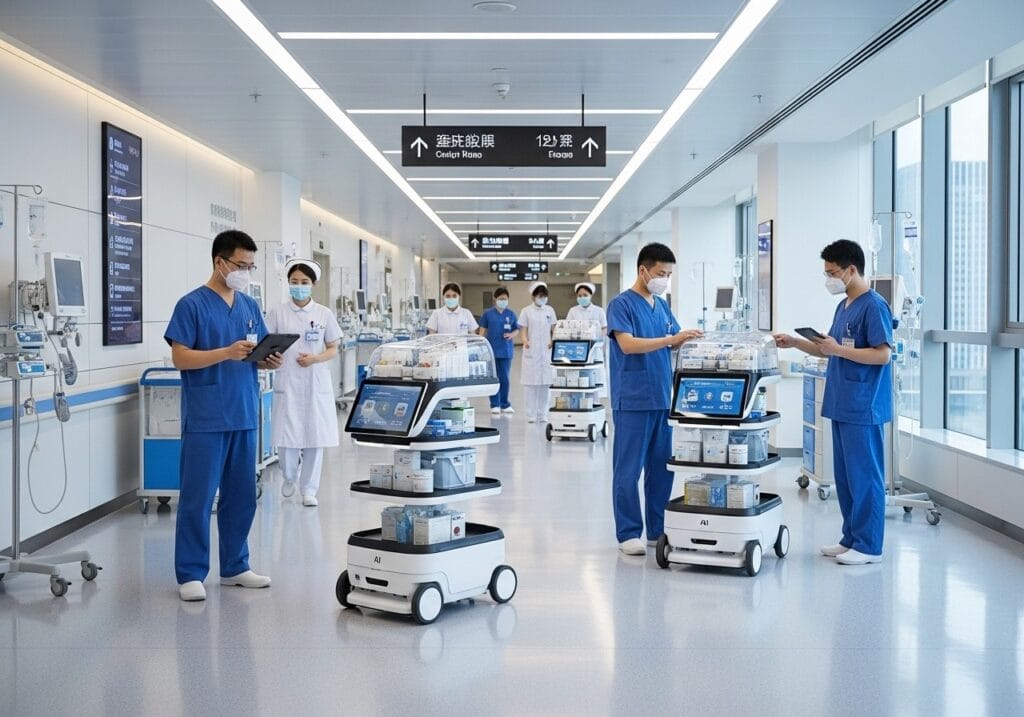
Beyond factories, robots are becoming common in hospitals across China. Since the pandemic, many hospitals have started using autonomous service robots to deliver food, medicines, and documents between departments.
In Beijing’s major hospitals, robots developed by Keenon Robotics and Pudu Robotics can move through hallways, avoid obstacles, and use elevators on their own. They help reduce the workload on nurses and limit human contact during sensitive medical situations.
Some hospitals are also testing surgical robots that can assist doctors in performing complex operations. These robots use advanced cameras and precision tools, improving safety and accuracy during surgery.
Healthcare robots are not limited to hospitals. In retirement homes and care centers, companion robots are being used to provide emotional support and monitor elderly patients. They can talk, remind people to take medicine, and even detect falls or unusual movements.
Robots in Everyday Life
While industrial and medical robots are the most visible, the next big step for China’s robotics industry is the home and service robot market.
In 2025, service robots are being introduced in restaurants, hotels, and shopping centers. They greet guests, take orders, deliver meals, and provide basic customer support. Many hotels in Shanghai and Hangzhou have robots handling check-in and room delivery services.
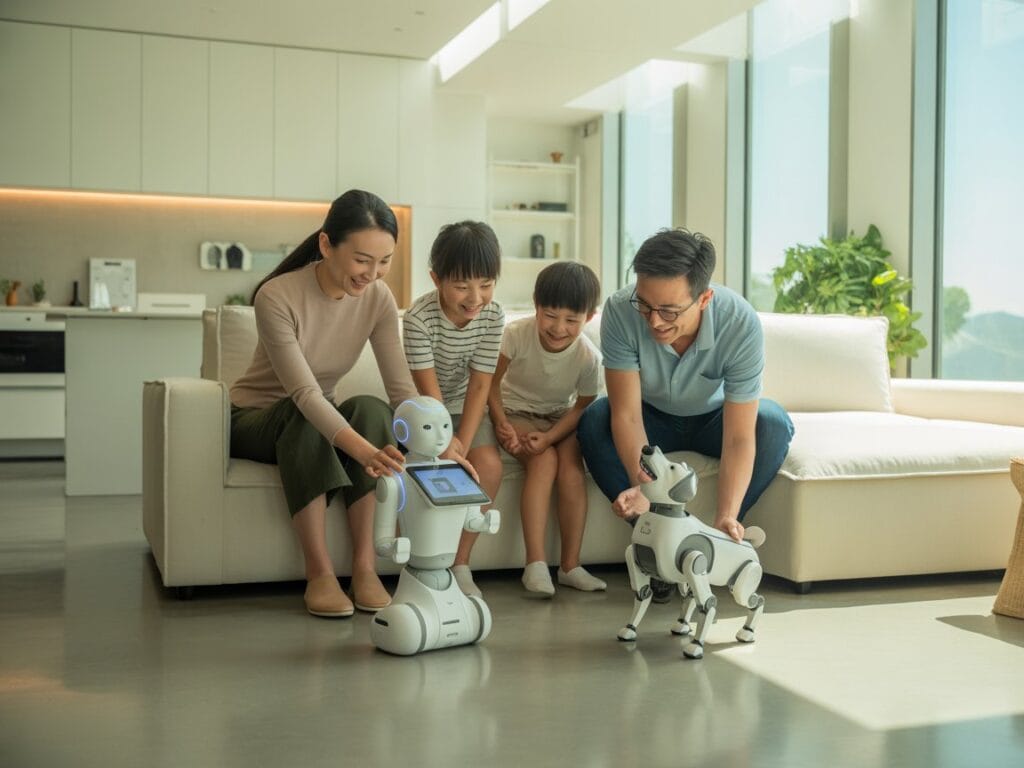
At the same time, household robots are gaining popularity among families. Smart cleaning robots, voice-controlled assistants, and even robotic pets are now being sold by major Chinese brands.
Companies like Unitree Robotics have developed robot dogs that can walk, run, and respond to voice commands. These robots are used both for companionship and for tasks like surveillance and logistics.
The Rise of Humanoid Robots
One of the most exciting developments in 2025 is the rise of humanoid robots—robots that look and move like humans.
Chinese tech companies such as Fourier Intelligence, Xiaomi Robotics Lab, and UBTech have unveiled humanoid prototypes that can walk, talk, and perform coordinated movements.
At the World Artificial Intelligence Conference (WAIC) 2025 in Shanghai, Fourier Intelligence demonstrated a humanoid robot capable of balancing itself, carrying objects, and interacting with people.
These robots are still in early stages, but they represent a major leap forward. The goal is to create robots that can assist in workplaces, homes, and even disaster zones where human presence is risky.
How the Government Supports the Industry
The Chinese government continues to support robotics as a key part of national growth. Several cities, including Shenzhen, Suzhou, and Hangzhou, have built dedicated robotics industrial parks where startups and researchers collaborate on new designs.
In 2024, China’s Ministry of Industry and Information Technology released a new roadmap aiming to make Chinese-made robots globally competitive by 2030. The focus areas include AI integration, humanoid design, and medical robotics.
The government also provides tax incentives and funding for companies working on automation, encouraging faster innovation in both hardware and software.
The Global Impact
China’s robotics expansion is not limited to its own borders. Chinese robots are now being exported to countries in Asia, Europe, Africa, and Latin America.
Affordable pricing and strong supply chains give Chinese manufacturers a major advantage. For many developing countries, Chinese robots provide a cost-effective way to modernize industries.
This global presence is also shaping the balance of power in technology. While Japan, South Korea, and the United States remain strong competitors, China’s ability to scale production and integrate AI gives it a unique edge.
Challenges and Concerns
Despite rapid progress, the rise of Chinese robots has raised several questions.
Some experts worry about job losses as automation increases. In sectors like manufacturing, many low-skill jobs have already been replaced by machines. There are also concerns about privacy and surveillance, as some service robots collect data from public spaces.
The Chinese government and private companies say they are working on rules to ensure safe and ethical robot use. However, the balance between innovation and regulation remains a key challenge.
What the Future Looks Like
By 2030, China is expected to dominate not only in industrial robotics but also in service and humanoid robots.
Experts believe that Chinese robots will become smarter, cheaper, and more human-like. They will be able to recognize emotions, respond naturally, and work alongside humans in offices, hospitals, and homes.
As technology improves, robots could also play a bigger role in addressing China’s aging population problem by taking over care and support duties for the elderly.