
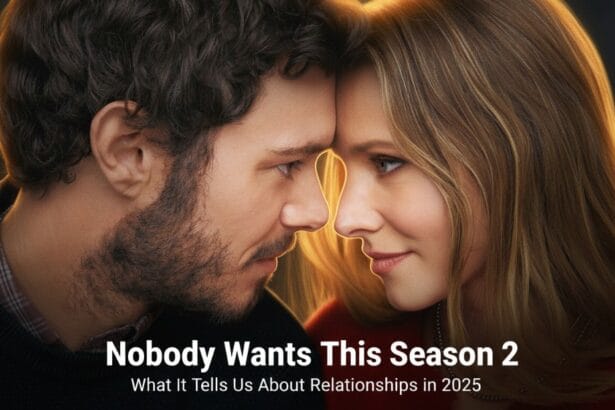
The second season of the hit Netflix series Nobody Wants This premiered today, and it’s giving viewers more than just laughs and romance. This season sheds light on how relationships in 2025 are evolving—in culture, expectations, and personal growth.
A New Chapter in Modern Love
When the show returns, viewers find the central couple—Noah Roklov (played by Adam Brody), a kind Jewish rabbi, and Joanne Williams (played by Kristen Bell), an outspoken agnostic podcaster—navigating the next stage of their relationship.
In season one, their connection felt spontaneous and fun. In season two, the stakes are higher—family expectations, religious differences, and life choices loom larger.
What this says to the modern audience: relationships today aren’t just about chemistry. They’re about values, identity, and growth.
Reflecting Relationships in 2025
1. Identity and Beliefs Matter
In this season, the tension between who you are and who you choose to be is front and center. Joanne and Noah’s different backgrounds highlight the reality many couples face today: belief systems, culture, and tradition can affect relationships more deeply than ever.
Creators of the show admit that they wanted to stay real about this. “It’s not easy staying in a happy relationship,” says co-showrunner Jenni Konner.
2. Authenticity Over Fairytales
Unlike old-school romantic comedies, the show avoids glossing over the hard parts. The scripts lean into awkward conversations, real family dynamics, and personal compromise. That reflects how many U.S. viewers in 2025 see love: messy, honest, and growing.
3. Technology, Dating & The Modern Era
While the show doesn’t make technology its main focus, the backdrop of podcasting, social media, and modern career lives shapes the setting. Joanne’s job as a podcaster and the social media eyes around new characters all mirror the fact that relationships today exist in a mix of public and private, old and new.
Why the Timing Matters
As the series debuts in late 2025, it arrives when audiences are recalibrating how they view love. Many Americans are marrying later, rethinking labels, blending traditions, and focusing on emotional health. The show captures this shift by depicting more than just “will they or won’t they”—it asks, “How will they?”
When this season was first announced, show creator Erin Foster said the team wanted to “give audiences what they want.” By that she meant real stories about people trying to fall and stay in love.
What to Watch For
- Family vs. Individual Desires: Noah’s role as a rabbi carries responsibilities. Joanne’s independence and career come with their own challenges. The show asks: how do you balance commitment and self?
- Cultural Translation: How do two people with different traditions build something together? Season 2 brings in new cast members who increase the tension and the fun.
- Growth Through Conflict: Instead of sweeping difficulties under the rug, the show leans into “what if we change together” and “what if we don’t.” In 2025, that kind of story resonates.
Viewers Should Care
If you’re watching this in the U.S., you’ll recognize the questions. Do I keep my identity? Do I adjust? What does partnership mean today? Many relationships today involve negotiation, boundaries, and change. The show mirrors that.
For younger couples, for blended families, for those juggling work and belief systems, this season shows that love in 2025 isn’t simplified — but that doesn’t mean it’s less thrilling.
Final Thoughts
Season 2 of Nobody Wants This gives more than entertainment. It holds up a mirror to modern relationships. It says: love isn’t just a spark—it’s a conversation, a compromise, a choice.
And in 2025, when many of us are asking, “What does getting together really look like?”, this show offers a story that feels familiar, fresh, and full of questions worth asking.