

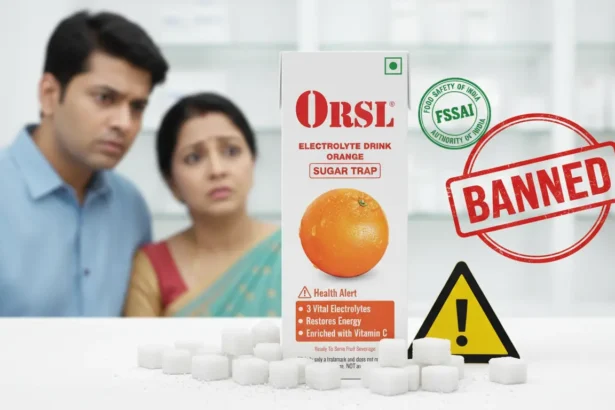
India’s Food Safety and Standards Authority (FSSAI) recently made headlines by banning the use of the term “ORS” on drinks that don’t follow World Health Organization (WHO) standards. This move directly affects ORSL, one of India’s most popular electrolyte and hydration drinks.
The ban came after growing health concerns that ORSL contains too much sugar, making it unsafe for children. While the goal is to protect families, especially parents who buy such drinks for their kids, the Delhi High Court has allowed existing ORSL stock to remain on sale for now.
What Is ORSL?
ORSL is made by JNTL Consumer Health Limited, a part of Kenvue, which spun off from Johnson & Johnson. The drink comes in flavors like apple and orange, sold in 200 ml tetra packs priced between ₹20 and ₹30.
It is widely available in pharmacies, supermarkets, and online stores. The company promotes it as a quick way to restore electrolytes, energy, and vitamin C—especially during hot summers or after illness. However, health experts say that ORSL is not a true oral rehydration solution (ORS) and may cause more harm than good.
Why Doctors Raised Concerns About ORSL
The issue with ORSL started several years ago. In 2017, pediatricians began to notice that children with diarrhea became sicker after drinking ORSL.
Why? This is due to the fact that a single 200 ml pack of ORSL contains approximately 10 grams of sugar, which is almost the same amount as a small soft drink.
True ORS, according to WHO guidelines, contains only water, salts, and a small amount of glucose. This exact balance helps the body absorb fluids quickly. But ORSL adds extra sugar and flavor, which actually pulls more water into the intestines, making dehydration worse instead of better.
The Pediatrician Who Fought Back
Dr. Sivaranjani Santosh, a pediatrician from Hyderabad, led a long campaign against misleading ORSL labeling. For over eight years, she met with health officials, shared case studies, and warned that high-sugar drinks were worsening children’s dehydration.
She explained that too much sugar draws water into the intestines, causing more loose stools and dangerous electrolyte imbalances. In severe cases, it can even lead to brain swelling, seizures, or death.
Her persistence finally paid off in 2025, when FSSAI banned all products using “ORS” on labels unless they strictly followed WHO standards.
Court Stay Delays Full Ban
The ban affected several brands, including ORSL, Glucon-D ORS, and Rebalance.
However, JNTL Consumer Health Limited challenged the order in court. The company reportedly has ₹180 crore worth of ORSL stock, or about 90 million packs, in the market. Losing this information would mean huge financial losses.
On October 15, 2025, the Delhi High Court issued an interim stay, allowing existing ORSL stock to be sold until a full hearing takes place.
Despite the FSSAI’s disagreement and clarification that it had not approved the sales, the stay order remains in effect for the time being.
Public Reactions on Social Media
The court’s decision sparked outrage across social media platforms. On X (formerly Twitter), one user wrote,
“₹180 crore stock matters more than 140 crore lives?”
The post went viral with thousands of likes and shares. Many parents also shared personal experiences, saying their kids fell sick after drinking ORSL.
Doctors joined the conversation too. Dr. Cyriac Abby Philips, also known as TheLiverDoc, called for a complete boycott of ORSL, saying:
“Let the stock rot.”
Soon, hashtags like #NoORSL and #BanSugarDrinks started trending across India.
The Marketing Confusion
A major reason for the controversy is marketing and placement. ORSL commercials show active, smiling kids and highlight “quick energy” and “fast rehydration.”
However, few notice the fine print that says “Not an ORS.” Pharmacies often keep ORSL next to real ORS packets, confusing buyers even more.
While true ORS sachets like Electral cost around ₹5 and meet WHO standards, ORSL is more expensive but far less effective in medical dehydration cases.
Safe Hydration Tips for Parents
If you want to keep your child hydrated safely, here’s what experts recommend:
- Use WHO-approved ORS like Electral or generic sachets.
- Mix ORS properly—follow the instructions exactly using clean water.
- Avoid fruit juices, sodas, and sweetened drinks like ORSL during illness.
- Consult a doctor if dehydration symptoms persist.
- Make homemade ORS in emergencies:
- 1 liter of clean water
- 6 teaspoons sugar
- ½ teaspoon salt
Give it in small sips throughout the day. For kids, about 50–100 ml per kg of body weight per day is ideal during illness.
What Happens Next
The ORSL case shows how public health, business interests, and regulations often clash. The FSSAI acted on science and public complaints, but the court must still decide how to balance safety with business rights.
Experts hope the final ruling will favor children’s health. As Dr. Sivaranjani says,
“Protect kids first—profits can wait.”