

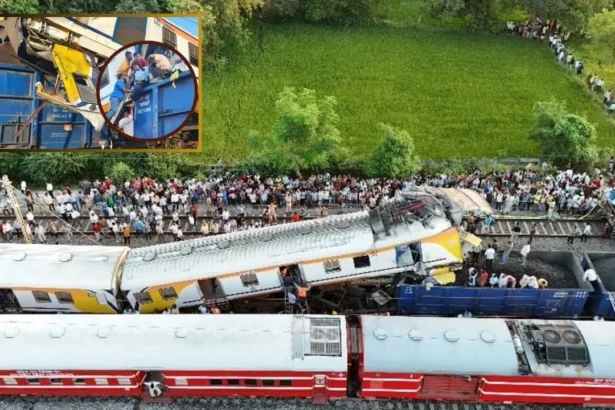
The Bilaspur train accident on November 4, 2025, has sent shockwaves through India’s rail network, claiming eight lives and leaving 14 others injured in a devastating rear-end collision. This tragic event near Bilaspur railway station in Chhattisgarh underscores ongoing concerns about railway safety, signaling failures, and emergency response protocols. As investigations unfold, here’s a comprehensive breakdown of the incident, including what caused the crash, heroic rescue efforts, government compensation announcements, and lessons for global rail systems – including parallels to U.S. Amtrak challenges.
What Happened in the Bilaspur Train Collision?
Around 4 p.m. on a busy afternoon, MEMU passenger train No. 68733, en route from Gevra Road in Korba district to Bilaspur, slammed into the rear of a stationary goods train on the up line between Gatora and Bilaspur stations. The impact was catastrophic: the lead coach of the passenger train derailed and mounted the freight wagons, mangling overhead electrical lines, signaling equipment, and multiple coaches. Eyewitnesses described a scene of chaos, with twisted metal and passengers trapped amid the wreckage.
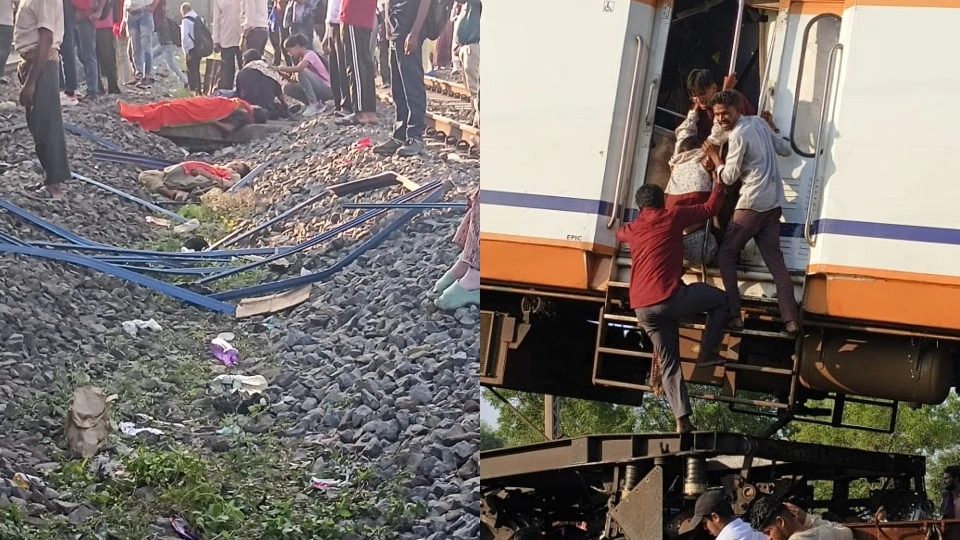
Initial reports from railway officials indicate the passenger train carried over 200 commuters, many returning from work in the coal-rich region. The collision halted all rail traffic on the vital Bilaspur-Katni and Bilaspur-Howrah routes, leading to cancellations and diversions for several long-distance trains, including the Nagpur-Bilaspur Express. By evening, the death toll had risen from four to eight, with victims including the train’s loco pilot and passengers from the severely damaged first coach.
This isn’t just a local tragedy – for international audiences, especially in the U.S., it highlights vulnerabilities in high-traffic freight-passenger corridors, similar to those along Amtrak’s busy lines where signal errors have caused near-misses.
Also Read: ISRO LVM3-M5 ‘Bahubali’ Rocket Successfully Launches India’s Heaviest Communication Satellite CMS-03
Rescue Operations: Swift Action Amid the Wreckage
Rescue teams sprang into action within minutes, transforming the site into a coordinated hub of relief. Senior officials from the South East Central Railway (SECR), including General Manager and Bilaspur Divisional Railway Manager, arrived promptly to direct operations. The National Disaster Response Force (NDRF), local police, and fire services deployed gas cutters, hydraulic jacks, and a massive 140-ton breakdown crane to extricate those pinned under debris.
#WATCH | Bilaspur, Chhattisgarh: Sanjay Agrawal, DC, Bilaspur says, "The last bogie and first bogie of a local train and a goods train collided near Bilaspur. Four people have lost their lives in the accident. Rescue operation is underway…" https://t.co/enkpNHyiWh pic.twitter.com/5xobXb3DJD
— ANI (@ANI) November 4, 2025
Injured passengers – 14 in total, with 16-17 in serious or critical condition – were airlifted or transported via ambulances to top facilities like Apollo Hospital and the Chhattisgarh Institute of Medical Sciences (CIMS) in Bilaspur. Medical teams reported treating lacerations, fractures, and crush injuries, with some victims still undergoing surgery as of November 5. Local volunteers and railway staff played a pivotal role, providing first aid and emotional support to shell-shocked survivors.
Railway helplines buzzed with calls from anxious families: Bilaspur (07752-233435), Korba (07759-222001), and a national line (139). By late night, all trapped individuals were freed, though two remained unaccounted for initially, fueling round-the-clock searches. This rapid response minimized further casualties, but it also exposed gaps in real-time communication during peak-hour rushes.
Probable Causes: Signal Failure Under Scrutiny
Preliminary findings point to a critical error: the MEMU train allegedly overshot a red signal, failing to stop before ramming the halted goods train. The Railway Board confirmed this as the likely trigger, with the stationary freight possibly waiting for clearance on the single-track section. Human factors, such as driver fatigue or distraction, are being probed, alongside potential lapses in the automatic warning system (AWS).
A full inquiry by the Commissioner of Railway Safety (CRS) is underway, expected to deliver a report within weeks. This crash adds to a string of signal-related incidents in India’s vast 68,000-km network, which transports 23 million passengers daily. Experts call for mandatory upgrades like the Train Collision Avoidance System (TCAS), already piloted in high-risk zones.
For a U.S. perspective, this mirrors debates around Positive Train Control (PTC) mandates post-2015 Amtrak crashes. With Amtrak’s $66 billion infrastructure boost, could advanced tech have prevented Bilaspur’s outcome? The answer could shape cross-border safety collaborations.
Government Response: Compensation and Condolences
Chhattisgarh Chief Minister Vishnu Deo Sai, visibly moved, visited the site via video and issued a heartfelt statement: “This is an extremely saddening loss; the state stands with every affected family.” He directed round-the-clock monitoring, ensuring free medical care and psychological support.
In a swift relief measure, the government announced ex-gratia payments:
- ₹10 lakh (~$11,900 USD) to families of the deceased.
- ₹5 lakh (~$5,950 USD) for seriously injured victims.
- ₹1 lakh (~$1,190 USD) for those with minor injuries.
The central government matched contributions, with Railways Minister Ashwini Vaishnaw pledging additional aid from the Prime Minister’s National Relief Fund. Opposition leaders, including TMC’s Abhishek Banerjee, echoed condolences, urging a white paper on rail safety investments.
These steps provide immediate solace, but advocates demand systemic reforms to address overcrowding and under-maintenance in freight-heavy routes like Bilaspur’s coal belt.
Broader Impact: Sparking Global Talks on Railway Safety
The Bilaspur train accident 2025 isn’t isolated – it amplifies calls for robust emergency preparedness in India’s railways, from AI-driven signals to crew training. Disruptions rippled nationwide, stranding thousands and costing millions in delays. For diaspora communities in the U.S., with strong ties to Chhattisgarh, it’s a stark reminder of travel risks abroad.
Internationally, this tragedy fuels discussions on harmonizing safety standards. Amtrak’s recent signal upgrades offer a blueprint: Full PTC rollout could slash collision risks by 80%, per FRA data. As India eyes high-speed rail by 2030, blending U.S. tech with local needs might prevent future heartbreaks.
Railway authorities vow transparency, with track restoration targeted for November 5 evening. Families urge faster justice, while survivors rebuild – a testament to resilience amid grief.
For updates on the Bilaspur train accident, train collision causes, rescue operations, or compensation announcements, bookmark this page. Helplines remain active. Sources include official railway statements and on-ground reports. Keywords: Bilaspur train accident 2025, Chhattisgarh train collision, MEMU goods train crash, railway safety India, ex-gratia compensation, signal failure investigation.