

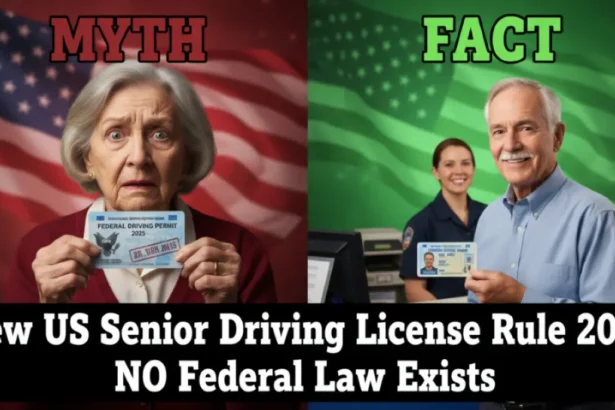
The new US senior driving license rule 2025 is reshaping how older Americans maintain their driving privileges, with a focus on enhanced safety measures for drivers aged 70 and above. As road safety remains a top priority for federal and state authorities, these updates introduce stricter renewal processes, mandatory testing, and varying state-level implementations. If you’re a senior driver or caring for one, understanding the new US senior driving license rule can help avoid surprises at the DMV.
This comprehensive guide breaks down the key changes under the new US driving license rule for seniors, including how states are rolling them out and what the renewal process looks like in 2025. While there is no single nationwide federal mandate overriding all state laws, the National Highway Traffic Safety Administration (NHTSA) has issued stronger guidelines encouraging uniform standards, leading many states to adopt similar policies effective this year.
Key Changes in the New US Senior Driving License Rule 2025
The new US senior driving license rule 2025 primarily targets drivers over 70, aiming to reduce accidents caused by age-related declines in vision, reaction time, and cognitive function. Highlights include:
- Age-Based Renewal Frequency: Most states now require renewals every 2–5 years for seniors (down from 8–10 years for younger drivers).
- Mandatory Vision and Knowledge Tests: In-person vision screenings are standard, with some states adding written knowledge or road skills tests.
- Medical Evaluations: Physicians may need to submit reports for conditions like dementia or vision impairment.
- Restricted Licenses: Options for daytime-only or no-highway driving if full privileges are at risk.
- No Automatic Revocation: Licenses aren’t revoked solely based on age—only if testing fails.
These updates stem from NHTSA recommendations updated in late 2024, pushing for evidence-based assessments to keep unsafe drivers off the road while respecting seniors’ independence.
Also Read: Trump’s Deportation Plan Faces Voter ID Challenge in Key Swing Districts
State-Level Implementation of the New US Driving License Rule for Seniors
Implementation varies significantly across the US, as driver’s licensing is a state responsibility. Here’s a breakdown of how major states are handling the new US senior driving license rule 2025:
| State | Age Trigger | Renewal Cycle | Required Tests | Key Notes |
|---|---|---|---|---|
| California | 70+ | Every 5 years | Vision, knowledge; road test if flagged | In-person renewal only; online options eliminated for seniors. |
| Florida | 80+ | Every 6 years (8 years under 80) | Vision and hearing | Mature Driver Vision Test required; high adoption due to retiree population. |
| Texas | 79+ | Every 6 years (2 years at 85+) | Vision only | No road test unless referred by law enforcement or doctor. |
| New York | 70+ | Every 8 years | Vision; physician statement possible | Enhanced photo ID process; mail-in renewal restricted. |
| Illinois | 75+ | Every 4 years (2 years at 81–86; 1 year at 87+) | Road test mandatory | One of the strictest; Safe Driving Week initiatives tied in. |
| Pennsylvania | 65+ | Every 4 years | Vision; random physical exams | Seniors get renewal reminders with medical form options. |
| Arizona | 65+ | Every 12 years until 70, then 5 years | Vision only | Extended expiration for those passing voluntary tests. |
| Michigan | 70+ | Every 4 years | Vision; possible restrictions | No in-person for clean records under certain conditions. |
Note: Rules are effective as of November 2025 and subject to local DMV updates. Always check your state’s official DMV website for the latest.
Smaller states like Oregon and Nevada have aligned closely with NHTSA guidelines, mandating cognitive screenings for those over 75 with prior incidents. In contrast, states like Alabama and Mississippi maintain more lenient policies, focusing primarily on vision checks.
Renewal Process Updates Under the New US Senior Driving License Rule
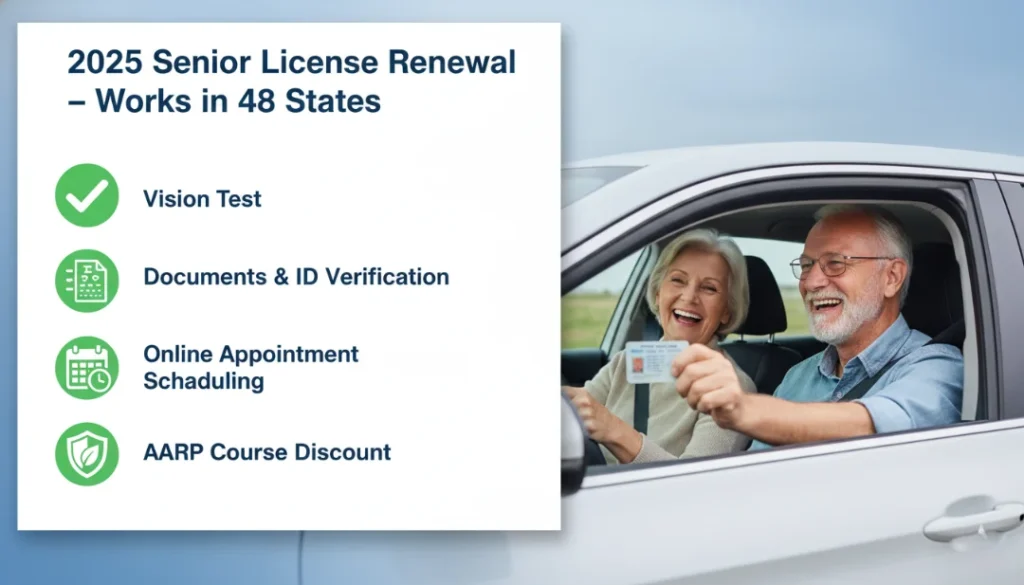
Navigating the new US senior driving license rule 2025 renewal process is straightforward if prepared. Here’s a step-by-step guide:
- Receive Notification: DMVs send reminders 60–90 days before expiration. Ignore at your peril—driving on an expired license can lead to fines up to $500.
- Gather Documents: Proof of identity, residency, Social Security number, and any medical reports.
- Schedule Appointment: Most states now require in-person visits for seniors 70+. Book online via DMV portals to avoid long waits.
- Complete Tests:
- Vision Test: Must meet 20/40 standards (with corrective lenses if needed).
- Knowledge Test: 20–30 questions on road signs and rules (passing score: 80%+).
- Road Test: Triggered by poor vision results, doctor referrals, or traffic violations.
- Pay Fees: Renewal costs range from $20–$50, plus additional for tests ($10–$25).
- Receive Temporary License: Full plastic card mailed within 2–4 weeks.
Pro Tips for Smooth Renewal:
- Practice free online DMV tests tailored for seniors.
- Get an eye exam beforehand from an optometrist.
- If denied, appeal within 30 days—many states offer retests or restricted licenses.
- Family members can accompany seniors for support, but not during tests.
Why These Changes Matter for Seniors and Families
The new US driving license rule for seniors balances safety with mobility. Statistics show drivers over 75 have higher crash rates per mile driven, prompting these reforms. However, advocates like AARP argue the rules promote fairness by focusing on ability, not age.
For the 50+ million Americans over 65, staying informed about the new US senior driving license rule ensures continued independence. Alternatives like public transit, rideshares, or senior transport programs can ease transitions if driving is limited.
Final Thoughts
The new US senior driving license rule 2025 marks a proactive step toward safer roads, with state-level variations allowing tailored approaches. Whether you’re in a strict state like Illinois or lenient one like Texas, early preparation is key. Visit your local DMV site today to check your status and avoid disruptions.
For personalized advice, consult a doctor or elder law expert. Stay safe on the road!