

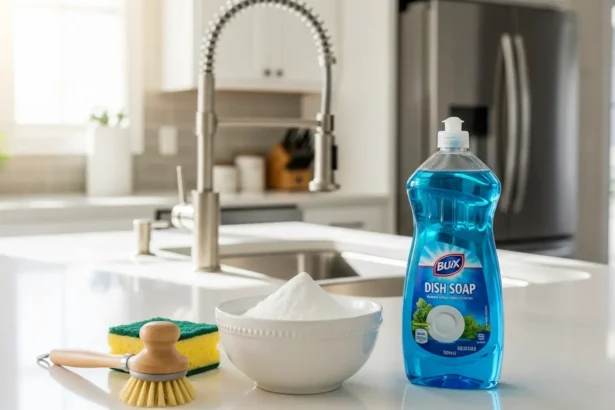
Who knew two simple kitchen ingredients could replace half your cleaning cabinet? The dish soap and baking soda combo has quietly become one of the most effective and affordable ways to keep homes sparkling clean.
You don’t need expensive sprays, harsh chemicals, or hours of scrubbing. With just these two items — already sitting in most kitchens — you can tackle grime, grease, stains, and odors from nearly any surface.
This powerful pair is more than just a quick fix. It’s an eco-friendly cleaning trick that’s safe, budget-friendly, and perfect for anyone trying to clean everything naturally. Together, they make a homemade cleaner that rivals store-bought products, but without the harsh fumes or toxins.
So what makes this mix so magical? Let’s explore why this duo is changing how people clean across America.
Why People Are Ditching Chemical Cleaners
More and more households in the U.S. are moving toward natural cleaning tips and chemical-free alternatives. There’s a growing awareness of how harsh many traditional cleaning products can be — irritating skin, polluting indoor air, and leaving behind toxic residues.
Walk down any cleaning aisle, and you’ll see long ingredient lists with chemicals most of us can’t pronounce. Add to that the strong artificial scents that linger for hours — and it’s easy to see why people are searching for safer solutions.
That’s where baking soda and dish soap step in. Both are simple, non-toxic, and already part of daily life. Baking soda naturally deodorizes and scrubs, while dish soap cuts grease and kills germs. Combined, they create a cleaner that works without the side effects of chemical sprays.
It’s easy, cheap, and effective — no gloves, masks, or fancy tools required. This is the kind of baking soda cleaning hack that’s helping people simplify their routines and protect their families’ health.
The Science Behind the Combo
There’s real science behind the dish soap and baking soda combo — it’s not just another cleaning myth. Each ingredient brings something unique to the mix.
- Baking soda is a gentle abrasive. It breaks down grime, removes stains, and neutralizes odors. Its mild texture helps scrub surfaces without scratching.
- Dish soap works as a degreaser. It contains surfactants — molecules that lift oil and dirt from surfaces, allowing them to rinse away easily.
When you mix the two, you create a powerful reaction: the baking soda scrubs and lifts dirt, while the dish soap surrounds the grease and breaks it apart. The result is a balanced cleaner — tough on messes but gentle on surfaces.
It’s this perfect harmony that makes the baking soda and dish soap paste so effective. It cuts through grease and grime, deodorizes, and leaves surfaces shining — all while being safe enough to use bare-handed.
That’s what makes it one of the best natural cleaning tips to come out of everyday kitchens.
How to Make the Perfect Cleaning Paste
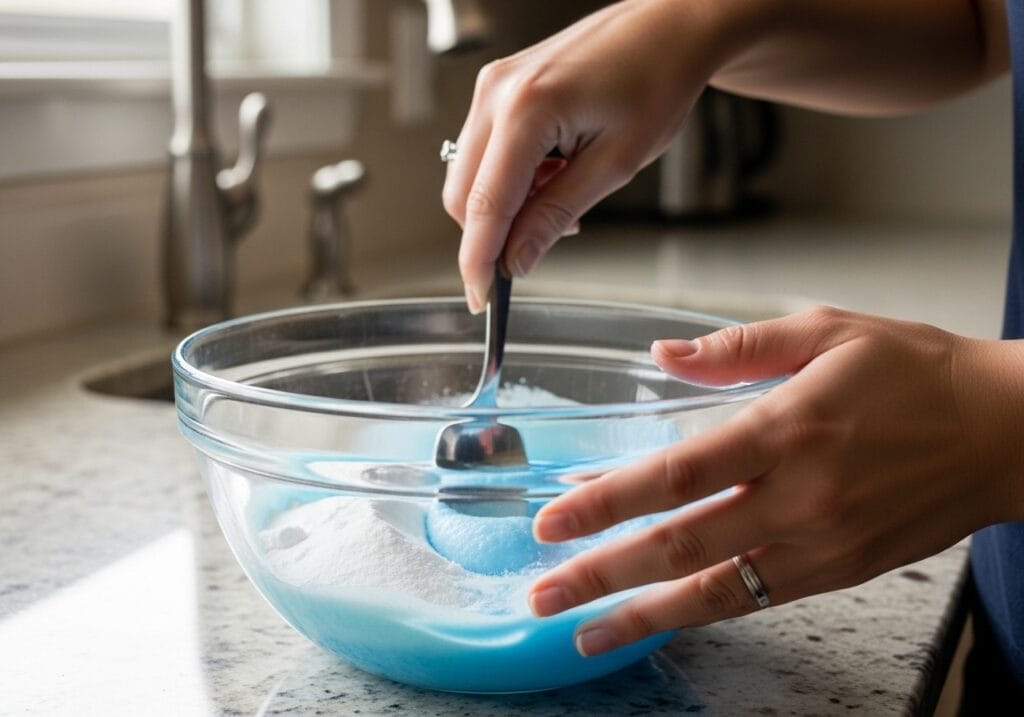
Creating your own homemade cleaner using this combo is simple and takes less than a minute. You only need two ingredients and a small bowl.
Ingredients:
- 1 part dish soap
- 2 parts baking soda
- (Optional) a few drops of essential oil (lemon, lavender, or eucalyptus)
Instructions:
- Add the baking soda and dish soap to a small bowl.
- Stir until it forms a smooth, creamy paste.
- Add essential oil for fragrance if desired.
- Transfer to an airtight container to store for up to one week.
This baking soda and dish soap paste is versatile and easy to make on demand. It’s thick enough to stay on vertical surfaces but gentle enough not to damage them.
Safety tip: Avoid using this paste on marble, granite, or any unsealed stone surface — the baking soda may dull the finish. For everything else, it’s fair game.
This simple mix proves you don’t need a cabinet full of cleaners when one natural blend can clean everything naturally.
Where This Combo Works Best
Here’s where the magic truly shows. The dish soap and baking soda combo works on almost every surface in your home. It’s the kind of cleaner that makes you wonder why you ever bought commercial products in the first place.
Kitchen
- Removes baked-on grease from oven doors and trays.
- Cleans stovetops, countertops, and sinks effortlessly.
- Makes stainless steel appliances shine.
Bathroom
- Scrubs tubs, tiles, and shower walls clean.
- Removes soap scum and mildew without harsh bleach.
- Cleans grout lines and leaves faucets gleaming.
Laundry
- Acts as a pre-stain treatment for oily spots or collar grime.
- Freshens up gym clothes and removes odors naturally.
Shoes & Sneakers
- Eliminates odor and lifts dirt from white soles.
- Perfect for cleaning fabric shoes without damage.
Outdoors
- Cleans patio furniture, grills, and car tires.
- Removes grime from outdoor toys or garden tools.
This mix truly cleans everything, from delicate surfaces to stubborn dirt. It’s proof that sometimes the simplest things work best.
Real-Life Test: Putting It to Work
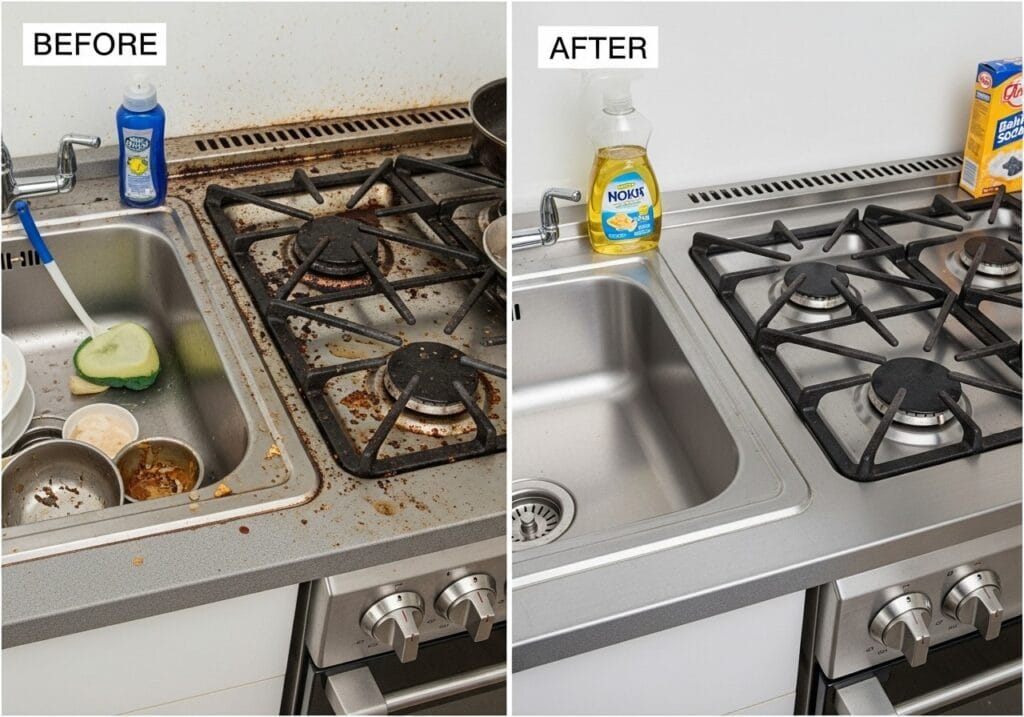
To see how well this baking soda cleaning hack worked, I decided to test it on three of the toughest spots in my home: a burnt frying pan, a stained sink, and grimy shower grout.
For the pan, I applied a thick layer of the baking soda and dish soap paste and let it sit for 10 minutes. After a light scrub, the black residue lifted right off — no steel wool needed.
In the sink, it tackled soap scum and hard water marks easily. A quick rinse left it shiny and fresh.
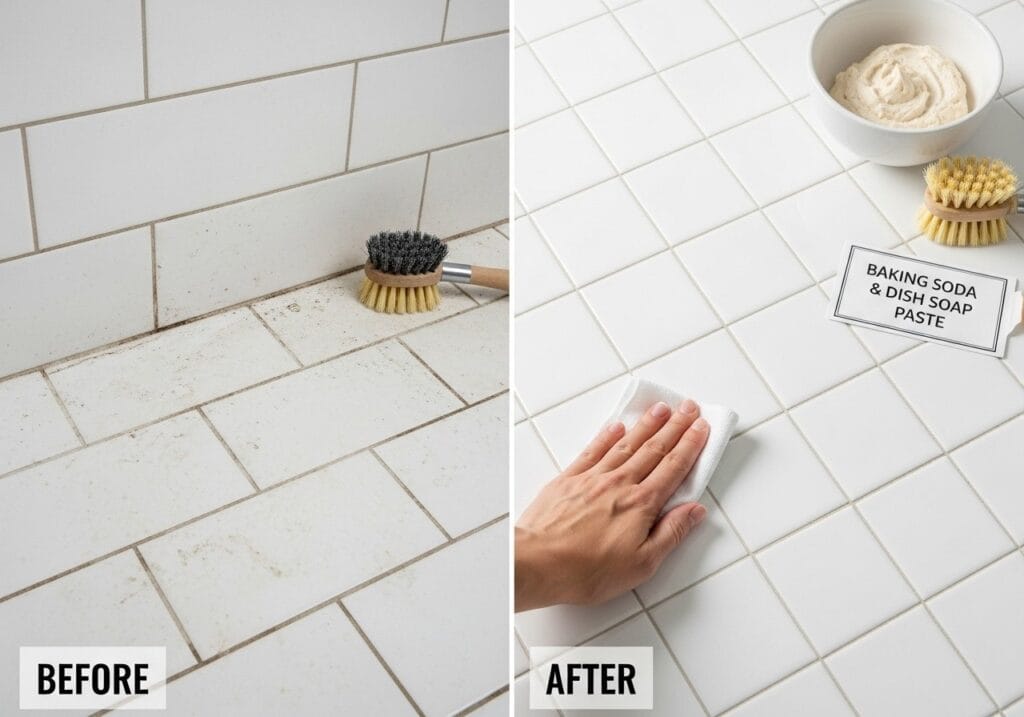
Finally, the grout. I used an old toothbrush to scrub the paste into the tiles. The results were instant — the dirt loosened, and the lines looked bright again.
No harsh smells, no stinging hands, and no endless scrubbing. This small experiment proved what the internet claims: this duo really does clean everything naturally.
Bonus Tips for Maximum Cleaning Power
To make the most of your new homemade cleaner, follow these pro-level tips:
- Let the paste sit for 10–15 minutes on stubborn spots before scrubbing.
- Use warm water when cleaning greasy pans — it helps activate the dish soap.
- Use a soft sponge or toothbrush for tight areas like grout or faucets.
- Rinse thoroughly after cleaning to avoid residue.
- Combine with vinegar for extra-tough buildup (but only after rinsing off the baking soda first).
These little tricks make your eco-friendly cleaning trick even more effective — ensuring a deeper clean with minimal effort.
Cost & Eco Benefits
One of the best parts about the dish soap and baking soda combo is how budget-friendly it is. While commercial cleaners can cost anywhere from $5 to $10 per bottle, this DIY cleaner costs just pennies per use.
But it’s not only about money. This combo also helps the planet. By using fewer plastic bottles and avoiding harsh chemicals, you reduce household waste and prevent toxins from entering water systems.
That’s why so many Americans are switching to eco-friendly cleaning tricks like this one. It’s sustainable, simple, and incredibly effective — aligning perfectly with the country’s growing love for natural cleaning tips.
With this approach, you save money, protect your health, and contribute to a cleaner planet.
Common Mistakes to Avoid
Even though this baking soda cleaning hack is foolproof, there are a few small mistakes to watch out for:
- Using too much dish soap: It can make surfaces slippery and hard to rinse.
- Applying on unsealed marble or granite: The baking soda can dull the finish.
- Leaving the paste too long: Extended contact can dry out on delicate surfaces.
- Skipping the rinse step: Always rinse well to avoid residue buildup.
Following these simple rules ensures you get the best results from your baking soda and dish soap paste without damaging anything in your home.
Conclusion: The Only Cleaner You’ll Ever Need
The dish soap and baking soda combo proves that sometimes the best solutions are the simplest ones. This affordable, safe, and eco-friendly cleaning trick delivers powerful results without harsh chemicals or high costs.
It works on almost every surface, cuts through grease, removes stains, and deodorizes your home — all while helping you clean everything naturally.
So before you reach for another expensive, chemical-filled bottle, give this $1 duo a try. It’s safe for your hands, good for the environment, and strong enough to handle whatever mess life throws your way.
Because when it comes to cleaning, sometimes nature — and your kitchen — really does know best.