

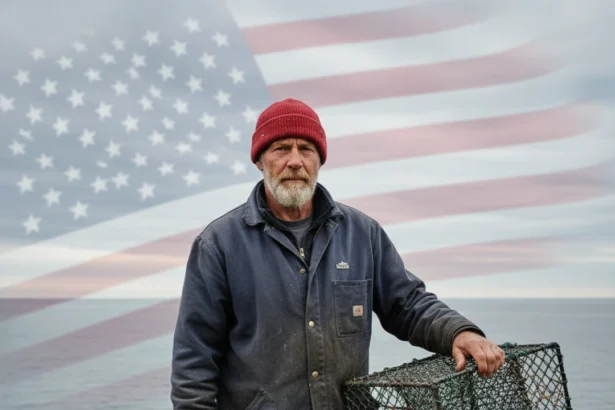
Graham Platner, a Maine oysterman and U.S. Marine veteran, is making waves in American politics. His campaign for the U.S. Senate has become one of the most talked-about political stories of the year. Platner, who calls himself a “working-class fighter,” is challenging Washington’s elite system and aiming to bring change from the bottom up.
A Veteran and an Oysterman Steps Into Politics
Before politics, Platner lived a life far from the halls of Congress. He served in the Marine Corps and the Army National Guard, completing four tours of duty. After leaving the military, he returned to Maine and began oyster farming on the coast. His small business, built by hand, became a symbol of his working-class values and self-reliance.
Platner announced his candidacy earlier this year, saying he is tired of seeing “politicians sell out regular people to the rich.” His main opponent is long-time Republican Senator Susan Collins, who has served in office for nearly three decades. Platner says the time has come for Maine to have “a senator who knows what it means to struggle.”
A Populist Message That’s Gaining Attention
Platner’s speeches sound very different from most politicians. In his campaign launch video, he said, “I’ve been to war. I’ve worked with my hands. I know who the real enemy is—it’s the oligarchy. It’s the billionaires who buy our politicians and the elites who sell us out.”
His blunt words have struck a chord with voters who feel ignored by both major parties. His campaign focuses on rebuilding trust with working-class Americans—people who fish, farm, build, and serve their communities.
Platner often speaks at small rallies near docks, farms, and local markets instead of expensive hotels or convention centers. Supporters say this shows who he really is—one of them. His message, they say, feels honest, direct, and real.
Policies Focused on Everyday People
Platner’s platform includes economic reforms and social programs meant to help working families. He supports Medicare for All, higher taxes on billionaires, and more federal investment in housing and local industries.
He also wants to boost small businesses, protect fishermen’s rights, and strengthen programs for veterans. Platner says the government has “plenty of money for wars and corporations but not for housing or health care.” His campaign slogan, “Work, Not Wealth,” sums up his philosophy.
Still, some Democrats in Washington are unsure about him. His anti-establishment tone and refusal to follow party rules have caused tension within the Democratic Party. But Platner says he doesn’t care. “I’m not running for them,” he said at a rally. “I’m running for you.”
Controversies and Criticism
Like many populist candidates, Platner has faced controversies. Some of his old online posts resurfaced this month, including angry language and political comments he later deleted. He has since apologized and said he was “speaking out of frustration” years ago.
Another issue appeared when reporters noticed a tattoo on his chest that resembled the Nazi “Totenkopf” symbol. Platner said he got the tattoo in 2007 while serving overseas and did not know its historical meaning. He has promised to cover or remove it. “I don’t support hate in any form,” he said. “That’s not who I am.”
Critics question his judgment, but supporters believe the attacks are political distractions. Many see him as an authentic figure—imperfect but real—in contrast to career politicians who seem too polished or disconnected from everyday life.
A Symbol of Working-Class America
Platner’s story resonates far beyond Maine. Across the country, more Americans are frustrated with what they call “politics for the rich.” Platner’s rise shows that rural, small-town voters are ready for new voices.
He is not just a candidate; he represents a growing movement—one that believes ordinary people should have power again. His image as a soldier, farmer, and father gives him credibility that few Washington insiders can match.
Looking Ahead
The 2026 Senate race in Maine will be one to watch. If Platner wins the Democratic nomination, he will face Susan Collins in what could become one of the most closely watched races in the nation.
Whether or not he wins, Graham Platner has already changed the conversation. He has shown that politics can still be about people—not parties.
As he told a crowd last week near Portland, “We’ve been told to settle for less. We’ve been told to wait our turn. But this is our turn—the people’s turn.