


Imagine starting your day, and your toilet quietly scans your health—no blood tests, no doctor visits, just a flush. Sounds futuristic? That’s exactly what Kohler claims its new toilet sensor can do.
The company behind some of the world’s most luxurious bathroom designs has now stepped into the health tech world with a bold promise: a toilet that monitors your wellness. But does the Kohler toilet sensor truly work as advertised, or is it just another high-tech gimmick?
Let’s break down how it works, what it actually measures, and whether it’s worth the buzz.
What Exactly Is Kohler’s Toilet Sensor?
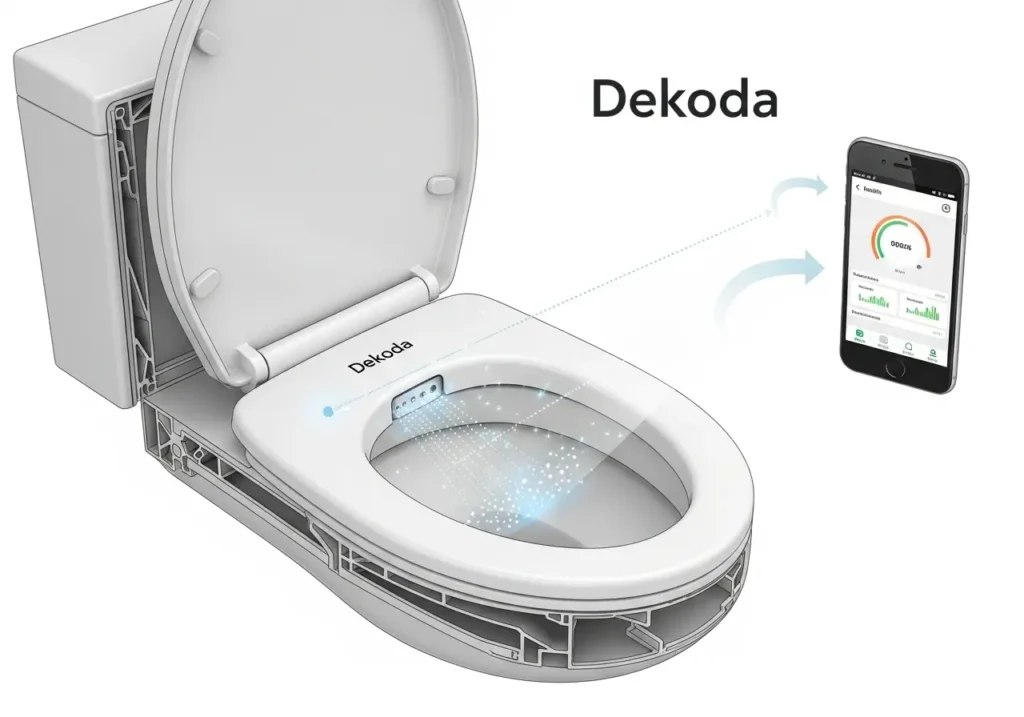
In 2025, Kohler Health—a new division of Kohler Co.—unveiled a smart device called Dekoda, a rim-mounted sensor designed to analyze the contents of your toilet bowl after every use.
The Kohler toilet sensor uses optical spectroscopy and AI-driven imaging to evaluate hydration levels, stool consistency, and even trace elements like blood in waste. In other words, it aims to turn your bathroom into a mini health lab.
Key Details:
- Device Name: Kohler Dekoda Sensor
- Price: Around $599, plus an optional $6.99/month subscription
- Launch Year: 2025 (as part of Kohler Health’s debut)
- Core Purpose: Early health insights from hydration, digestion, and urinary data
The company says its goal is to make the bathroom the new wellness hub—a private space that supports daily health tracking with zero effort.
How the Kohler Toilet Sensor Works
The Dekoda sensor attaches to the inside rim of compatible Kohler toilets. Once installed, it uses light-based spectroscopy to analyze waste. This is similar to how lab instruments measure chemical compositions—but simplified for home use.
What It Monitors:
- Hydration Levels – By analyzing the color and concentration of urine.
- Gut Health Indicators – Consistency and shape of stool to infer digestive balance.
- Blood Traces—Detects hemoglobin presence in waste (early warnings for certain conditions).
- Routine Trends—Identifies deviations from your normal patterns over time.
Data is sent to the Kohler Health app, where you can track trends, receive notifications, and view personalized insights. It even supports multiple users, identifying each by flushing patterns and timing.
What It Actually Does—and What It Doesn’t
Let’s be real—Kohler’s toilet sensor isn’t a doctor. It doesn’t diagnose diseases or replace lab tests. What it does is provide trend-based health insights.
For example:
- It might alert you to drink more water if it detects consistent dehydration.
- It could suggest digestive irregularities if your stool data changes drastically.
- It can flag potential blood presence, prompting a medical check-up.
However, accuracy depends heavily on context—lighting, water clarity, bowl shape, and even cleaning agents can affect readings. Kohler has been clear that Dekoda is not an FDA-approved medical device, so any “alerts” should be viewed as early signals, not diagnoses.
In short: it’s a helpful wellness tracker, not a medical authority.
Privacy and Data Security: The Big Question
The thought of a camera or sensor in your toilet might raise eyebrows—and rightly so. Kohler insists the Dekoda only monitors the water surface, not the user.
Data is encrypted end-to-end and stored securely, with users retaining full control. However, as with all connected devices, cloud storage and health data collection raise valid privacy concerns. Kohler claims that no visual images are saved, and all analysis happens automatically.
Still, experts urge caution: “Even anonymized health data can reveal sensitive information over time,” says one privacy researcher. So if you’re privacy-conscious, think twice before syncing it with multiple platforms.
Is It Worth the Price?
At nearly $600 plus subscription, the Kohler toilet sensor isn’t cheap. It’s clearly aimed at early adopters—health enthusiasts, tech lovers, and luxury homeowners who already invest in smart home ecosystems.
Pros:
- Hands-free, daily health monitoring
- Early warnings for hydration and potential gut issues
- Seamless app integration
Cons:
- Not medically certified
- Expensive upfront and recurring cost
- Possible accuracy variations
- Privacy and comfort concerns
If you’re already tracking sleep, heart rate, and diet, this device fits naturally into your health routine. But if you’re just curious, you might be better off waiting until the technology matures.
The Bigger Picture: Smart Bathrooms Are the Future
The Kohler toilet sensor isn’t just about one gadget—it’s part of a growing movement to integrate health technology into daily spaces. From Withings’ smart urine scanners to TOTO’s AI-driven hygiene systems, our bathrooms are quietly becoming the next frontier in wellness tech.
Experts predict that within five years, smart toilets could:
- Detect glucose levels and hydration biomarkers
- Send data directly to doctors or nutritionists
- Help identify early signs of diseases like UTIs or colon cancer
So while Kohler’s version might be the first big leap, it’s certainly not the last.
Final Verdict: A Fascinating Glimpse of What’s Coming
The Kohler toilet sensor is both fascinating and slightly unsettling—a reminder that technology is creeping into even our most private spaces.
✅ It works for basic hydration and digestion tracking.
❌ It’s not yet accurate or regulated enough for clinical health insights.
If you’re comfortable with the privacy trade-off and want to be ahead of the curve, it’s an impressive piece of smart home innovation. For everyone else, it’s a peek into how the future of health might literally start in your bathroom.