
The Samsung Galaxy XR headset is finally here, and it’s creating serious buzz in the tech world. After years of rumors, Samsung has entered the extended reality (XR) market—and many people are calling it everything Apple’s Vision Pro should have been.
With a stunning design, advanced display, powerful chip, and a more practical user experience, the Galaxy XR might just redefine the future of mixed reality. In this article, we’ll explore what makes Samsung’s XR headset stand out, how it compares to Apple’s Vision Pro, and why it might actually be the better choice for most users in 2025.
What is the Samsung Galaxy XR?
The Samsung Galaxy XR is a mixed-reality headset that blends the digital and physical worlds. It allows users to play games, attend meetings, watch movies, and explore virtual environments—all within one immersive experience.
Samsung built this headset in collaboration with Google and Qualcomm, which makes it a powerhouse of hardware and software innovation. Google provides the new Android XR platform, and Qualcomm powers it with the Snapdragon XR2+ Gen 2 chip. This means faster performance, smoother visuals, and better battery efficiency.
The headset also offers 6DoF (six degrees of freedom) tracking, allowing users to move naturally in space—forward, backward, up, down, and side to side—just like in real life.
Design and Build Quality
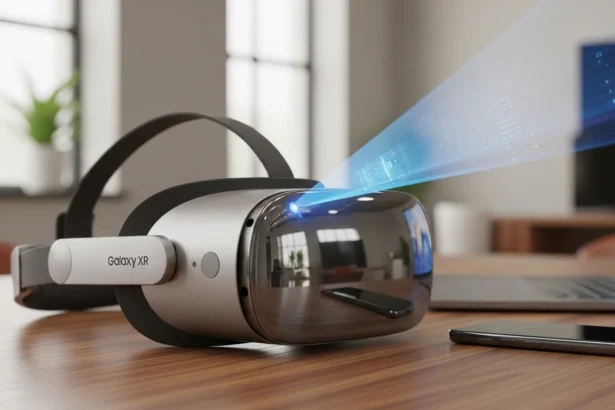
Samsung has always been known for its elegant designs, and the Galaxy XR is no exception. The headset has a sleek, lightweight body with a balanced front-to-back weight distribution.
Unlike the Apple Vision Pro, which many users found heavy after long use, the Galaxy XR aims for comfort. Its adjustable head strap, soft padding, and vented design make it more wearable for longer sessions.
The front of the headset features a glossy, futuristic look with embedded cameras and sensors. Samsung also added pass-through cameras, which let you see your real surroundings while staying immersed in virtual elements—something Vision Pro users will be familiar with, but Samsung’s version feels more natural and less laggy.
Display and Visual Experience
When it comes to display, the Galaxy XR truly shines. It uses dual 4K OLED microdisplays, offering sharp resolution and vibrant colors. The visuals look lifelike, with deep blacks and bright highlights—perfect for gaming or 3D movie watching.
Samsung also improved field of view (FOV), giving users a wider, more immersive perspective compared to the Vision Pro. That means fewer black borders and more “wow” moments.
And because Samsung makes some of the world’s best display panels, it’s no surprise that the XR headset delivers stunning visual clarity with minimal motion blur.
Performance and Power
Under the hood, the Samsung Galaxy XR runs on Qualcomm’s Snapdragon XR2+ Gen 2 chip, which is optimized for extended reality devices. The chip offers better cooling and 30% improved performance over previous versions.
You can multitask smoothly—open multiple windows, stream content, or use 3D design apps without noticeable lag. Paired with up to 16 GB RAM, this headset can handle demanding tasks easily.
Battery life has also been improved compared to Apple’s Vision Pro. Samsung claims up to 3 hours of continuous use, and it supports fast charging through USB-C.
Software and User Experience
This is where Samsung took a different approach from Apple. Instead of creating a closed ecosystem, Samsung’s Galaxy XR runs on Android XR, giving users more flexibility.
That means users can access a wider range of apps, games, and experiences from Google Play. It also integrates smoothly with Samsung Galaxy phones, Galaxy Buds, and smartwatches for a complete ecosystem experience.
The interface feels familiar—like using a Samsung smartphone, but in 3D space. Hand tracking, eye tracking, and voice commands make navigation intuitive. The Android XR interface is also optimized for multitasking, allowing you to drag, resize, and pin apps around your virtual workspace.
Audio and Interaction
The spatial audio system in the Galaxy XR offers realistic, 360-degree sound. You can hear sounds from all directions, enhancing immersion in games and movies.
Samsung also introduced gesture-based controls that are easy to use. You can grab, point, or scroll through apps using natural hand movements. Combined with eye-tracking, the device can predict what you’re looking at and respond faster.
For communication, the headset supports high-quality video calls using Samsung’s native apps or Google Meet, bringing virtual meetings closer to real life.
Galaxy XR vs. Apple Vision Pro
This is the comparison everyone wants to know — how does the Samsung Galaxy XR stack up against Apple’s Vision Pro?
| Feature | Samsung Galaxy XR | Apple Vision Pro |
|---|---|---|
| Display | Dual 4K OLED | Dual 4K micro-OLED |
| Chipset | Snapdragon XR2+ Gen 2 | Apple M2 + R1 |
| OS | Android XR | visionOS |
| Ecosystem | Open (Google + Samsung) | Closed (Apple-only) |
| Weight | Lighter, better balance | Heavier |
| Battery Life | ~3 hours | ~2 hours |
| Price (approx.) | $1,799 USD | $3,499 USD |
From this, it’s clear that Samsung focused on practicality and value. While Apple’s Vision Pro feels like a luxury device, the Galaxy XR aims to be accessible and usable for everyday consumers.
The lower price point makes it more appealing to a wider audience, especially in the U.S. market, where affordability often drives adoption.
Who Is the Galaxy XR For?
The Samsung Galaxy XR is designed for tech enthusiasts, creators, gamers, and professionals who want to explore the next generation of immersive technology.
It’s ideal for:
- Gamers who love VR and AR experiences
- Remote workers who want a portable 3D workspace
- Content creators exploring virtual environments
- Everyday users who want to watch movies or attend virtual concerts in a new way
Samsung has made sure this headset isn’t just for developers or elite users—it’s for everyone curious about the future of computing.
Price and Availability
The Samsung Galaxy XR is expected to launch in the U.S. in late 2025, priced around $1,799. That’s nearly half the cost of Apple’s Vision Pro, which gives Samsung a clear edge in the consumer market.
Early reviews suggest it offers great value for its features, making it one of the most talked-about tech releases of the year.