

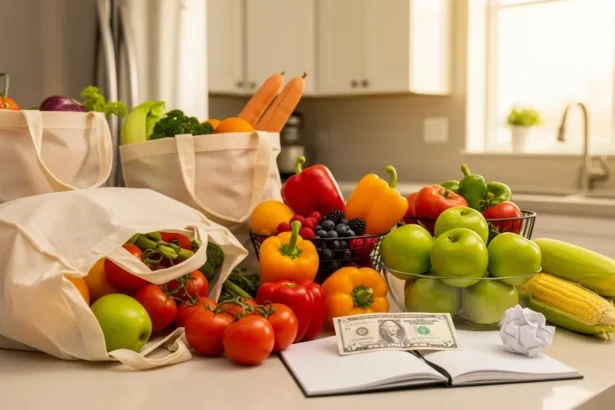
I never thought $5 could make such a difference in my grocery budget.
In today’s world, prices keep rising faster than paychecks. Groceries, once routine, now feel like a luxury. Every dollar matters — especially when you’re trying to feed a family or stick to a tight budget.
That’s when I came across a simple grocery hack that completely changed how I shop. It sounded almost silly at first — how could something that cost just $5 help me save money on groceries? But once I tried it, everything about the way I shopped shifted.
The Struggle: When Grocery Shopping Became a Budget Nightmare
Grocery shopping used to be one of the most stressful parts of my week. Inflation had pushed prices to new highs, and it felt like the cost of even the basics — eggs, milk, bread — was out of control.
Like many Americans, I often overspent. I’d buy things I didn’t need, forget what I already had, and end up throwing food away. My grocery bills kept climbing, and my frustration grew.
I knew I needed real budget shopping tips that actually worked — not just the usual “shop with coupons” advice that never made much difference.
The Discovery: Finding the $5 Hack
One evening, while scrolling through TikTok, I stumbled on a video about a $5 hack that promised to cut grocery bills dramatically. The idea was simple — buy a reusable meal planner notebook that helps track every meal, ingredient, and leftover for the week.
At first, I laughed. Could a $5 notebook really help me save money on groceries? It sounded too good to be true. But after reading thousands of comments from people who swore by it, I decided to give it a shot.
That small $5 purchase turned out to be the smartest decision I’ve made in years.
The Test: Putting the Hack to Work
In the first week, I used my $5 planner to write down everything I planned to eat — breakfast, lunch, dinner, and snacks. Then, I made my grocery list only from those meals.
I noticed an immediate difference.
- I stopped buying “just in case” items.
- I avoided duplicates.
- I started using what I already had in my pantry.
By the end of the month, I spent about $200 less than usual. I couldn’t believe how one simple grocery hack could bring such big results.
The Results: How $5 Turned Into $200 in Savings
Here’s how my grocery spending changed:
| Month | Before the Hack | After the $5 Hack | Savings |
|---|---|---|---|
| January | $640 | $440 | $200 |
Beyond saving money, I felt more organized and less anxious about food waste. My fridge stayed cleaner, my meals were better planned, and my family stopped complaining that “there’s nothing to eat.”
The emotional relief was just as rewarding as the financial one.
The Why: How This Hack Actually Works
The logic behind this grocery saving idea is simple: when you plan, you save.
Most people overspend because they shop without a plan. This $5 planner helps you stay aware of what you need, what you have, and what you’ll actually use. It cuts down impulse buys and food waste — the two biggest grocery budget killers.
Here are a few budget shopping tips I learned along the way:
- Never shop hungry — it leads to impulse buys.
- Compare unit prices instead of package prices.
- Always make a list and stick to it.
- Check your pantry before heading out.
Bonus Tips: Other Grocery Hacks That Actually Work
If you want to take your savings further, try these additional grocery saving ideas:
- Use cashback or rebate apps: Apps like Ibotta or Rakuten give you real cash back for everyday purchases.
- Stick to store brands: They’re often made by the same manufacturers as name brands — just cheaper.
- Freeze bulk items: Prevent spoilage and stretch your grocery runs.
- Meal prep on Sundays: Saves time, money, and mental energy all week.
These small changes, when added to your $5 system, can lead to hundreds in yearly savings.
Conclusion: Small Change, Big Impact
Looking back, that one $5 hack didn’t just save me money — it changed my mindset about shopping. I now see every trip to the store as a chance to be intentional and smart with my money.
If you’ve been struggling to save money on groceries, try this. It’s affordable, easy, and surprisingly effective.
Sometimes, it’s the smallest changes that make the biggest difference.
| Week | Planned Spending | Actual Spending | Savings |
|---|---|---|---|
| Week 1 | $160 | $135 | $25 |
| Week 2 | $150 | $118 | $32 |
CTA: What’s your favorite grocery hack? Share it in the comments — your idea might just help someone else save big!