
On February 1, 2021, Ford Motor Company and Google announced a long-term partnership that marked a new era in automobile innovation. The two industry giants joined hands to bring artificial intelligence (AI), cloud computing, and advanced data analytics into the heart of vehicle design and production. This collaboration goes beyond a traditional technology deal—it represents the start of the smart car revolution in the United States.
Over the next decade, cars will no longer just be machines with engines and wheels. They will become intelligent systems powered by software, capable of learning, updating, and communicating in real time. Google’s AI and Ford’s automotive expertise are together paving the way for this transformation.
A New Kind of Partnership
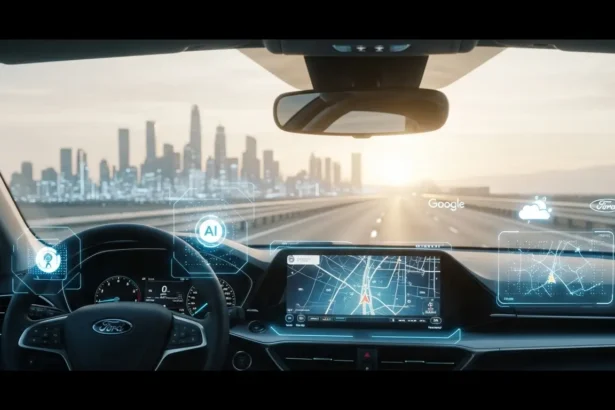
Ford selected Google Cloud as its preferred cloud service provider for six years. The partnership focuses on improving Ford’s operations, modernizing vehicle technology, and enhancing the driver experience. Millions of upcoming Ford and Lincoln models will run on Google’s Android Automotive operating system, which will feature Google Maps, Google Assistant, and other apps directly integrated into the dashboard.
The partnership also led to the creation of “Team Upshift,” a joint innovation group focused on exploring new digital business models. This team will develop personalized ownership experiences, new retail options, and data-driven customer services. For Ford, this is more than a tech upgrade—it’s a complete shift in how the company connects with customers and manages its vehicles.
Why This Matters for the Future
This collaboration between Google and Ford represents a major turning point for the U.S. auto industry.
- The rise of software-defined vehicles: Cars are becoming more about code than combustion. Instead of waiting years for new features, drivers can get updates and improvements through the cloud.
- Smarter manufacturing: Google’s AI tools help Ford predict parts demand, reduce production delays, and optimize the supply chain. This makes production faster and more efficient.
- Connected experiences: By using Google’s platform, Ford vehicles will seamlessly sync with smartphones, smart homes, and even other connected devices.
- Data-powered personalization: With proper user consent, Ford can analyze driving data to predict maintenance needs, suggest routes, or even customize dashboard settings based on driver habits.
- Sustainability through AI: Smarter systems can optimize fuel usage or manage battery efficiency in electric vehicles, supporting Ford’s shift toward a cleaner future.
Inside the Car: How It Works
Here’s how the Google-Ford partnership is changing what’s inside the car:
- Android-based infotainment: Instead of relying on third-party devices, Ford vehicles will have Android built in. Drivers can use Google Maps for navigation, play music via YouTube Music, or talk to Google Assistant hands-free.
- Over-the-air updates: Like smartphones, cars can now receive remote software upgrades. This keeps systems up to date without visiting a service center.
- AI-driven safety features: With Google’s machine learning, cars can detect hazards, analyze traffic, and make driving safer through predictive alerts.
- Cloud-based diagnostics: Ford’s connected vehicles can send performance data to the cloud, allowing for early detection of potential mechanical problems.
- Seamless voice control: Drivers can use natural speech to control temperature, navigation, and entertainment without taking their hands off the wheel.
What This Means for American Drivers
For everyday U.S. drivers, the benefits of AI-powered cars are easy to understand:
- More convenience: Navigation, entertainment, and communication tools are fully integrated, reducing distractions.
- Personalized driving: Cars can adapt to your preferences—seat positions, favorite routes, or preferred radio stations.
- Lower maintenance costs: Predictive diagnostics help avoid major breakdowns.
- Enhanced safety: Real-time traffic analysis and AI alerts make roads safer.
- Regular upgrades: Cars evolve with time, just like smartphones, adding new capabilities and improving performance.
However, as vehicles become more connected, data privacy and cybersecurity become vital concerns. Ford has made clear that customer data will not be shared with Google’s advertising business. All data use will follow strict privacy guidelines, focusing only on improving user experience and vehicle performance.
Challenges Ahead
Even though this partnership brings exciting innovations, challenges remain:
- Data protection: Connected cars rely on data, and securing it from misuse or hacking is critical.
- Cost: Advanced technology can raise vehicle prices, though Ford aims to make it accessible across models.
- Regulation: Laws around self-driving technology and data collection are still evolving.
- User adoption: Some drivers may be hesitant about AI-powered systems, preferring simpler interfaces.
- Reliability: Cars must work in all conditions, even when connectivity fails, which demands robust offline features.
A Step Toward Self-Driving Cars
While this partnership focuses on smart features and connectivity, it also sets the stage for self-driving vehicles. Google, through its Waymo project, already has deep experience in autonomous driving. Ford, on the other hand, has been testing its own driver-assist systems. By combining their strengths, the two companies could accelerate the move toward safer, more reliable autonomous cars in the near future.
Imagine a world where your car picks you up from work, plots the most efficient route, avoids traffic, and parks itself—all powered by AI. The Ford-Google partnership is bringing that vision closer to reality.
Looking Ahead
Between now and 2027, Ford will continue rolling out vehicles equipped with Google’s software and AI tools. Early models like the 2025 Ford Explorer will showcase what’s possible when a traditional automaker teams up with a tech giant.
In the next few years, U.S. roads will see an increasing number of connected, intelligent vehicles. These cars will not only talk to their drivers but also communicate with each other and with infrastructure, creating a smarter and safer transportation ecosystem.